
Begin a Presque Isle Property Search
Start with Presque Isle County BS&A Online. The public side of that service lets you search three ways. Address, name, or parcel number all work. An address feels the most natural. The parcel number is the most precise. It links assessment, tax, permit, and deed files without guesswork. Owner-name searches work when the street is a mystery. But trusts, estates, entities, and spelling variants can return several plausible matches.
Write down the local unit and legal description before you hop between systems. Presque Isle County includes two cities, two villages, and 14 townships. A postal city name does not always tell you the assessor. The collector holding the account may be a different local unit. Official records state what was filed, nothing more. They never substitute for a title opinion, a survey, or an appraisal.
- Find the parcel in BS&A by address, name, or parcel number.
- Save the owner, local unit, mailing and situs addresses, values, and legal description.
- Search the GovOS deed index for the newest recorded transfer.
- Check current or delinquent tax and building-permit services for that parcel.
- Use recorded plats, the plat book, and office records when a map is needed.
- Request an official copy or older file from the custodian when online access stops.
For a field-by-field walkthrough, see the Presque Isle County property search. It keeps the address, owner, and parcel routes distinct.
Presque Isle Property Records Offices
Presque Isle County property records are organized by function rather than by one central counter. The Register of Deeds holds the land instruments themselves. Local assessors build the parcel rolls. County Equalization checks class ratios and fairness. Treasurers keep the tax accounts. Construction and inspection files live with County Building & Zoning. Zoning decisions, though, may sit with city or township officials. The County Clerk and the courts round things out with probate, foreclosure, and quiet-title case files. Those files can shape who owns a property in Presque Isle County.
Presque Isle County Register of Deeds
151 E. Huron Avenue
Rogers City, MI 49779
989-734-2676
County Equalization and Local Assessors
151 E. Huron Street
Rogers City, MI 49779
989-734-3810
Presque Isle County Treasurer
151 E. Huron Avenue
Rogers City, MI 49779
989-734-4075
Presque Isle Deed Index Dates
The Register of Deeds traces land records back to the early 1850s, yet the computerized index only begins November 1, 1978. GovOS Quick Search takes one search term, which may be a grantor, a grantee, a subdivision, a document type, or a document number. Recorded-date limits, an image option, a last-24-hours choice, and index-only or full-text OCR scope round out the deed search tools.
| GovOS control | What it searches | Useful caution |
|---|---|---|
| Search Term | Names, subdivision, document type, or number | Verify against the legal description |
| Recorded Date | From and through dates | Use recording date, not only sale date |
| Index Only | Indexed fields | Multiple words are treated separately |
| Index & Full Text | OCR from document text | Multiple words are treated as a phrase |
That online cutoff is not where county land history starts. For earlier title work, turn to the courthouse vault. The deed books hold more, and so do the Archives of Michigan. Vault hours run 8:15 a.m. to 4:15 p.m. on county business days.
Open the official GovOS index shown here and read its current certification notice before searching.
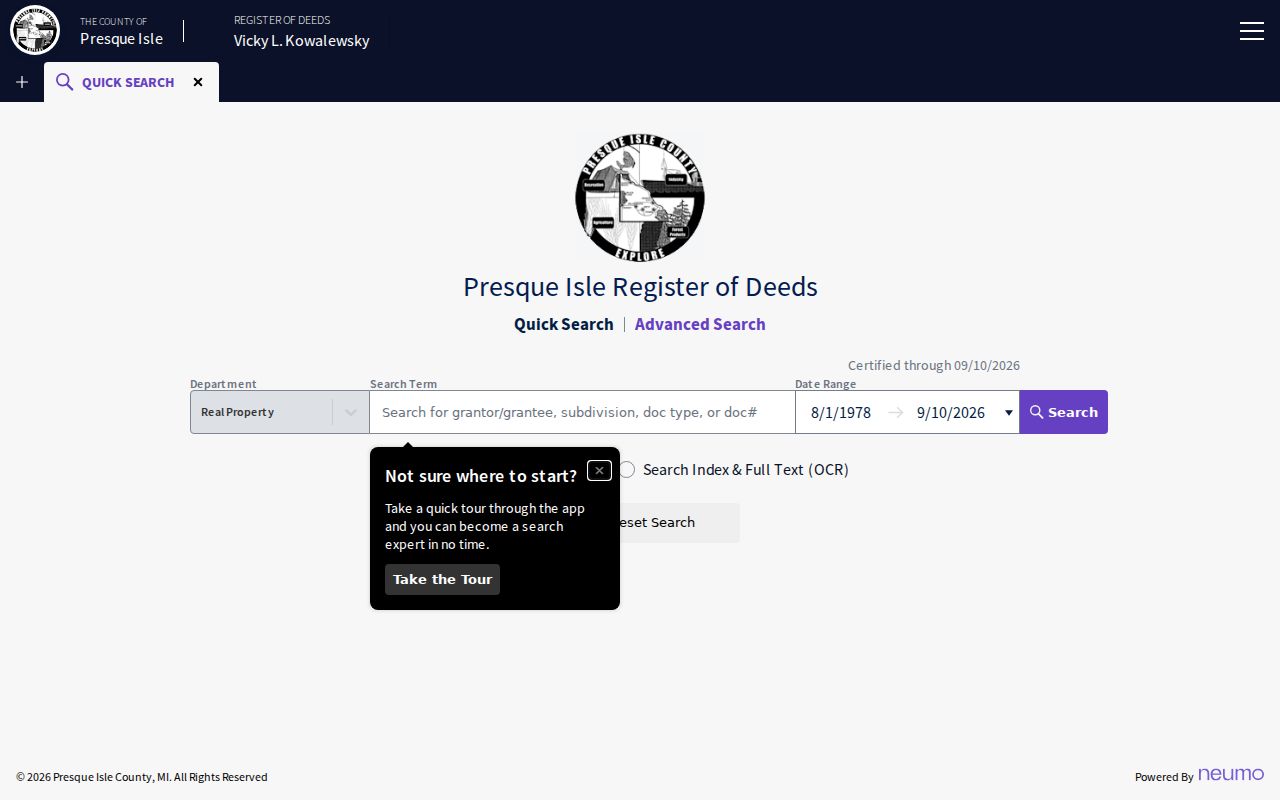
The official search form itself shows why every result should be saved with its name, date range, and search scope.
Presque Isle Tax Value Layers
A Presque Isle County tax parcel can carry several value figures at once. These include assessed value, State Equalized Value, Taxable Value, classification, and exemption data. Michigan's constitution caps assessed value at 50 percent of true cash value. Equalization studies sales and builds class ratios. The local assessor stays the first stop for an individual card, a correction, a classification question, or a Board of Review issue.
Proposal A can hold Taxable Value below assessed value or SEV. A transfer usually uncaps Taxable Value the following calendar year under MCL 211.27a. An exception may apply. That is why a prior owner's tax bill should never be projected onto a new purchase. Current and delinquent accounts sit in separate BS&A services. Local taxes move to the County Treasurer once they go delinquent.
Note: Michigan guidance treats a sale price as evidence of value, but one sale is not automatically the parcel's true cash value.
Presque Isle Mapping Has Limits
Presque Isle County publishes no official public GIS parcel viewer. County tax pages carry map links. The state lists a county parcel site, but the local surveying page states plainly that Presque Isle County does not have mapping online. Those map links should not be mistaken for a working county GIS map.
Pull the parcel code and legal description from BS&A instead. Then work from a recorded plat, a deed, a survey, or a physical plat book. MSU Extension sells a 2023 county plat book. The Library of Michigan lists map and atlas holdings from 1930, 1958, 1963, 1967, 1970, and 1974. Tax lines and plat-book drawings are clues, never proof of a surveyed boundary.
Read the local mapping limitation in its source before choosing a map route.
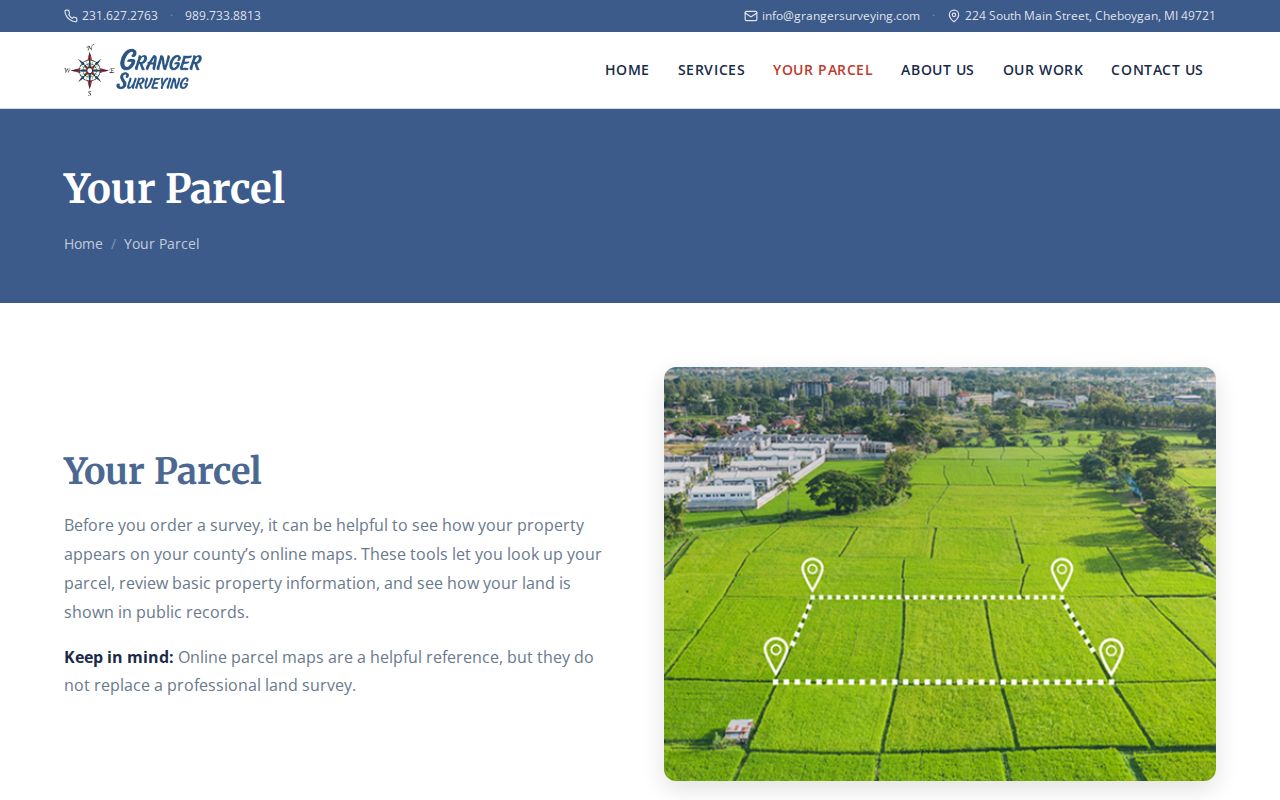
The official mapping statement itself supports the paper-plat and recorded-description fallback rather than any interactive county viewer.
Presque Isle Property Record Types
One parcel can surface in many Presque Isle County property records. Each file captures a different act. A deed records a transfer. The assessment roll supplies the tax key and the values. Tax files follow the bills and any delinquency. Plats and legal descriptions place the land, while permits document approved work and its inspections.
| Record Type | What It Documents | Kept By | Access |
|---|---|---|---|
| Deeds and land contracts | Recorded ownership transfers | Register of Deeds | GovOS from 1978; older books in office |
| Mortgages, liens, releases, easements | Recorded claims and land rights | Register of Deeds | Online index, images, and office copies |
| Assessment and tax | Values, class, exemptions, bills, delinquency | Local assessor, Equalization, treasurers | BS&A plus office request |
| Plats and parcel references | Lot, block, subdivision, and legal description | Register, Plat Board, Equalization | Recorded plats, books, and archives |
| Building and zoning | Work, inspection, use, and local approvals | County and local unit | BSA services, forms, and FOIA |
Let the question pick the file. The deed answers a recorded transfer, the roll identifies the active tax parcel, the treasurer confirms payment status, and permits reveal work history. Court and probate records can explain a transfer or a dispute, though the official case file stays with the court clerk.
Current and Delinquent Presque Isle Taxes
Property taxes in Presque Isle County start local. City, village, and township collectors issue the current tax bill and take first payments. Once real property taxes go delinquent, the account shifts into the county process. The County Treasurer page gathers current tax, delinquent tax, public land sale, and mapping links. It puts them all in one place. Keep perspective, though. A delinquent label alone says nothing about foreclosure or an upcoming sale.
Build a tax file with the parcel code and legal description. Add tax years, charges, notice dates, redemption status, foreclosure date, sale details, and any surplus notice. BS&A may leave some fields blank. For the official roll, notices, and sale file, ask the Treasurer directly. You can also send a narrow Michigan FOIA request. The county page also holds a settlement notice covering 2013 through 2020 auction surplus proceeds. Any old deadline there should be checked for current status.
Presque Isle Permits and Zoning
County Building & Zoning runs construction-code work across Presque Isle County. Its BSA platform handles applications, uploads, payments, and inspection requests. Records can span building, electrical, plumbing, mechanical, zoning, soil erosion, complaints, and corrections. Published applications ask for owner and mailing information. They also ask for site directions, township, property code, contractor details, work type, dimensions, estimated cost, and signatures. The official building page displays the service center and its full form inventory.
Zoning stays local in places. Rogers City manages planning, site plans, special uses, Zoning Board of Appeals matters, ordinance changes, and planned developments. The county still issues the building permits. Onaway publishes no public city lookup. City Hall, the city plan and ordinance, and County Building & Zoning form the fallback chain. One caution applies. A permit records approved work, not legal ownership.
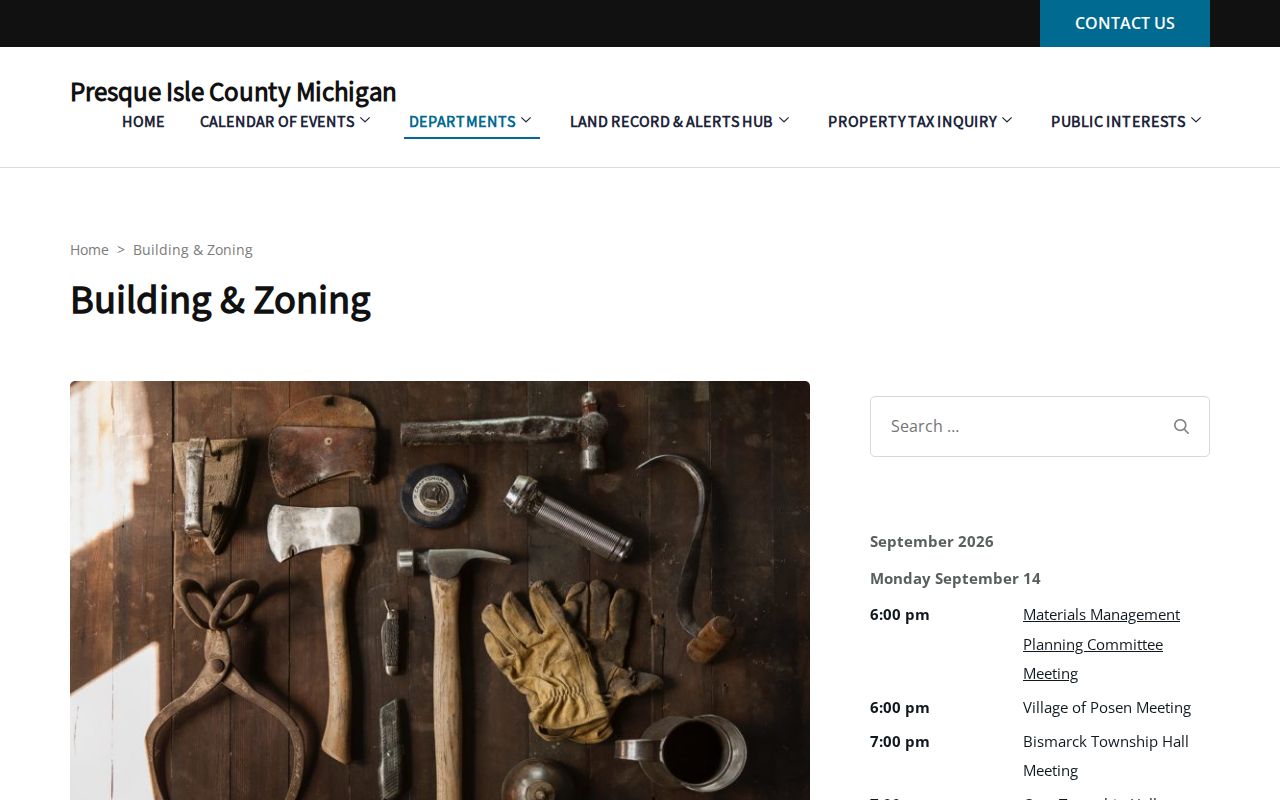
The capture links a parcel search to practical permit, upload, payment, and inspection channels.
Historic Presque Isle Land Records
Presque Isle County was laid off in 1840 and organized in 1871. The Register's early-1850s land books predate the modern county system. The Archives of Michigan county guide lists unusually precise historic runs. Deeds run from 1856 through 1940. Mortgages span 1858 through 1923, and assessment rolls cover 1878 through 1920. Land-tax statements survive from the 1870s and 1880s.
The Library of Michigan county guide adds directories from 1950 through 1982. It also lists newspapers, plats, atlases, cemetery works, and county histories. Presque Isle District Library keeps Michigan Collections in Rogers City and Onaway. These sources can tie a former owner to a place. Still, a directory or news item is only a lead. The deed and assessment file must confirm it.
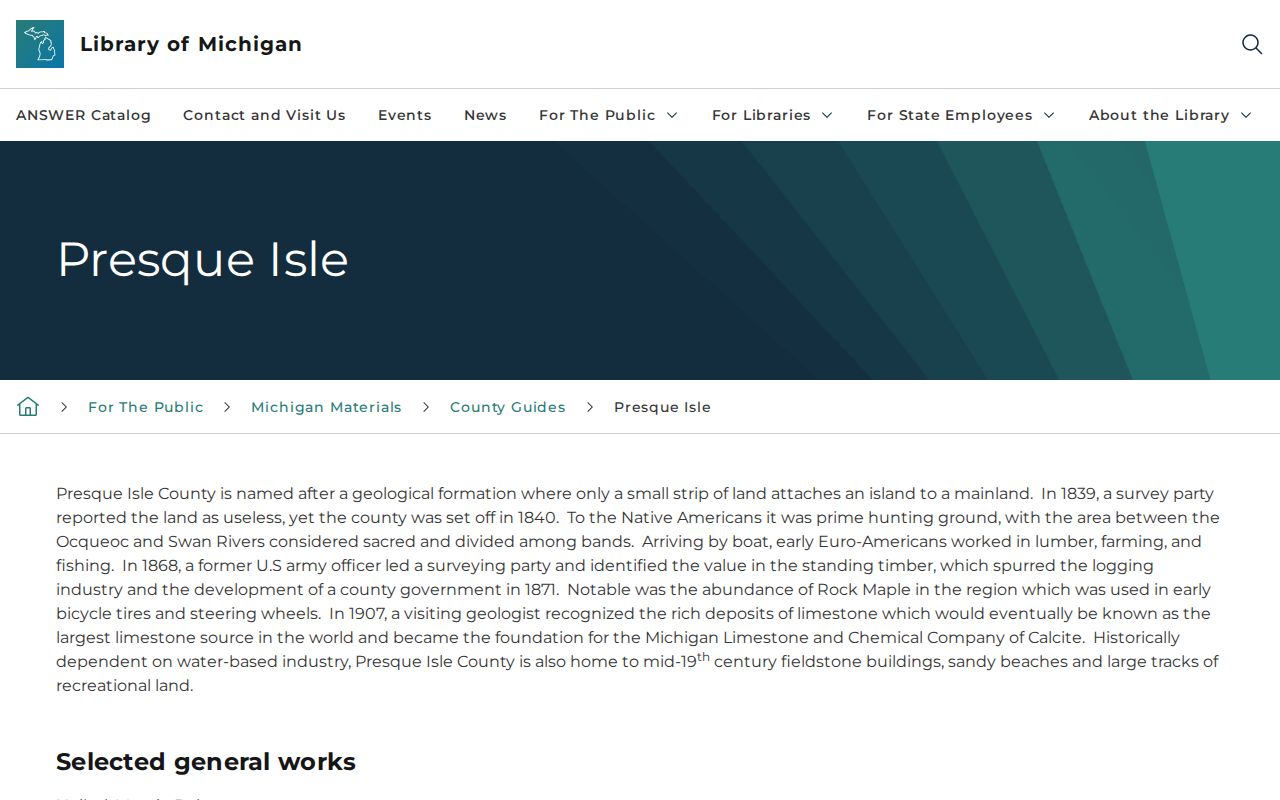
The catalog view bridges early land books and later online indexes.
Rogers City and Onaway Records
Rogers City and Onaway keep no separate land-title registries. Their deeds, mortgages, liens, easements, and plats remain Presque Isle County property records. City offices still matter for zoning, planning, utility, and local tax questions. County Building & Zoning stays the construction-permit authority in both cities.
Rogers City's plan names lakeside, central, cemetery, and Trout River areas, plus Hornbacher's Second Addition. Those labels can steer a subdivision search in GovOS. Onaway's plan centers on the State Street and M-68 downtown. It also shows distinct residential and mixed-use patterns. Postal ZIPs reach past municipal limits. So the parcel's local-unit code carries more weight. The city name in a mailing address matters less.
Onaway's historic courthouse is now a museum tied to the old county-seat campaign. Current deed copies still come from Rogers City. That split helps historical research. The museum supplies local context, while the Register supplies the recorded instrument.
FOIA for Missing Presque Isle Records
The Michigan Freedom of Information Act, MCL 15.231 et seq., backs you up. It applies when a public record is not posted. A clear written request names the office and the record type. It also lists a parcel code or address, a date range, and a preferred electronic format. The agency generally responds within five business days of legal receipt. It may also issue a written extension of up to ten business days.
FOIA suits a countywide assessment-roll extract. It also works for permit or inspection files not exposed in BSA. The same goes for an older tax list, or available parcel data. Fees may include copying, mailing, and qualifying search, review, or separation labor. Ask for an itemized estimate. A request can be granted or denied. It may also be granted in part when exempt material must be withheld.
Note: Online availability does not bar a request. The county may still charge for a new paper or digital copy of a posted record.
Presque Isle Property Alerts
The Register of Deeds offers free Property Alert and Fraud Sleuth notifications. Registration can flag any new instrument recorded in a chosen name. The alert does not block recording. It does not judge a document's validity or replace title insurance. It simply gives an owner a prompt. The owner can review an unfamiliar deed, mortgage, lien, or other filing. Open the official Property Alert entry and follow its current enrollment terms.
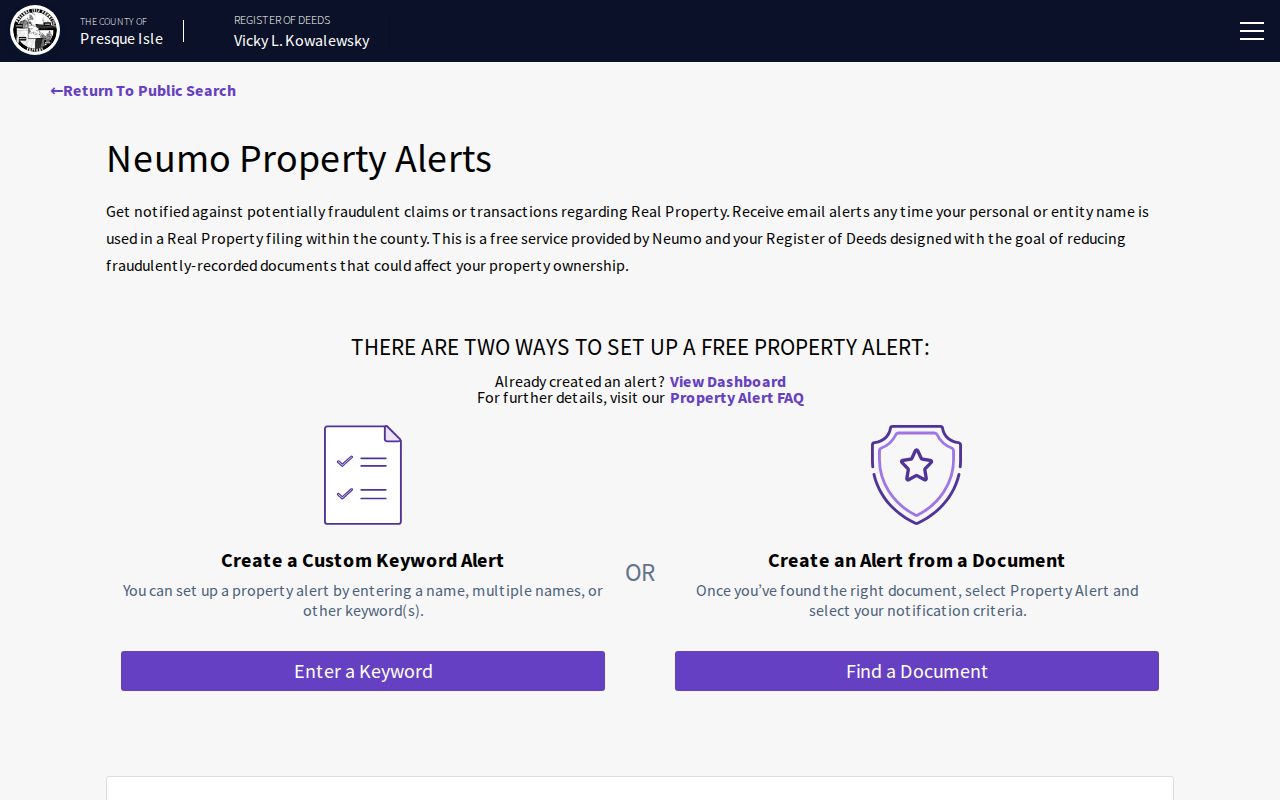
The county-linked notice tool works best when paired with review of the actual recorded document.
Limits of Presque Isle Property Records
Presque Isle County property records answer most ownership questions. An owner of record appears on the deed. Recorded transfers, tax roll values, bill status, legal descriptions, plats, and permits all sit in these documents. Filed encumbrances also sit there. Yet the records have firm limits. No parcel card proves who actually occupies a site. An online card can lag behind what the county has filed. Assessed and taxable figures are not a private appraisal. An index alone never establishes a surveyed boundary. An older lien entry can also shift in meaning. That shift can happen once a release or a later court order is recorded against the parcel.
Official sources still beat commercial compilations. Every county record has a named custodian and a formal correction route. Rely on the newest deed for a fresh transfer. Ask the local assessor to fix tax roll errors. When the instrument itself matters, order a certified copy from the Register or the court.
Lawful use. Presque Isle County property records support purchase research, tax appeals, boundary questions, estate work, and civic review. They must not be used to stalk, harass, or evade a protected address.