
Read Presque Isle Property Tax Records
Presque Isle County keeps no single master tax document. The assessor builds the assessment roll. County Equalization studies sales and applies class ratios. Treasurers then track the bill. BS&A Online serves as the shared public entry point, so a careful review follows one parcel code across all three layers while noting the tax year attached to each value.
| Field | What It Shows | Where |
|---|---|---|
| Assessed value / SEV | Equalized estimate, generally at no more than half of true cash value | Local assessor and Equalization |
| Taxable value | Value to which authorized millage is applied | Assessment roll |
| Classification and exemptions | Property class plus PRE, agricultural, poverty, or other relief | Local assessor |
| Current bill and payment | Charges and status before delinquency | City, village, or township treasurer |
| Delinquent account | Past-due real property tax handled in the county process | County Treasurer |
The assessed number is not a sale forecast. One purchase price can be atypical. Taxable value often trails SEV, because Proposal A caps annual growth until a transfer or another statutory event resets the math. Comparing years takes discipline. Record both values plus the transfer history instead of treating the bill total as the property's market price.
Presque Isle Tax Offices
The Presque Isle County Equalization Department is at 151 E. Huron Street in Rogers City and can be reached at 989-734-3810 on weekdays from 8:00 a.m. to 4:30 p.m. Equalization reviews classes and ratios across the county. It does not replace the city, village, or township assessor who sets the individual roll entry.
Current bills begin with the appropriate local collector. The county publishes a local treasurer directory, including code 150 for Rogers City and 160 for Onaway. Once real property taxes become delinquent, the County Treasurer, at 989-734-4075, becomes the key custodian. Supplying the parcel code, local unit, and tax year avoids sending a question to the wrong desk.
BS&A Presque Isle Tax Search
The county's BS&A service hub opens two tax searches. Current Tax Search and Delinquent Tax Search both sit on the home page. Detailed Record Search appears too. So do building records, permit applications, payments, and inspections. The hub does not list every covered tax year, though, so treat older bills as uncertain until confirmed with the office that holds them.
| Search input | Best use | Check before relying |
|---|---|---|
| Address | Find the likely tax parcel | Confirm situs and local unit |
| Owner name | Find accounts tied to a roll name | Allow for trusts, estates, and name variants |
| Parcel number | Return to the exact tax key | Keep the full hyphenated code |
Treat BS&A as a reference source. Correction questions go to the local municipality. A card that looks incomplete deserves a check with the assessor or treasurer who owns the record. The county's Equalization Department page links the property-tax inquiry and the forms used for review and exemptions.
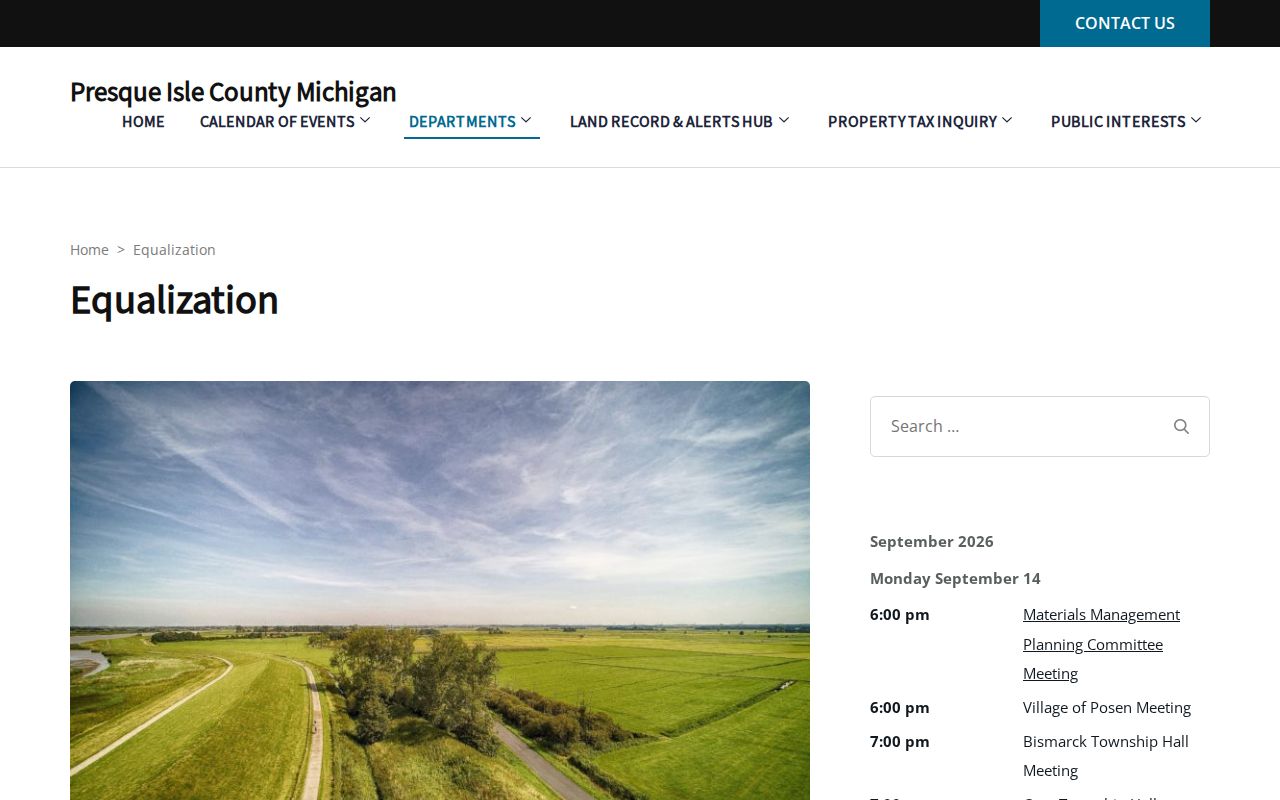
The Equalization page lays out both roles at once. County review and the local assessor route appear together in one official source.
Michigan Values on Presque Isle Records
Michigan Constitution Article IX, Section 3 caps assessed value at 50 percent of true cash value. Assessed value becomes SEV after county equalization. SEV stands for State Equalized Value. Taxable Value drives the actual tax. Authorized millage multiplies that figure to produce the bill, and the terms answer different questions even side by side on one Presque Isle County property tax record.
- True cash value
- The statutory market-value concept used in assessment.
- Assessed value / SEV
- The equalized value, generally no more than half of true cash value.
- Taxable Value
- The capped value used with millage to calculate tax.
- Millage
- A tax rate applied per thousand dollars of taxable value.
- Tax lien
- A legal claim arising from unpaid property tax.
Proposal A can keep Taxable Value below SEV. Additions and losses also move the cap. A clean year-to-year comparison keeps SEV, Taxable Value, millage, exemptions, and bill status in separate columns.
Presque Isle Transfers and Uncapping
A transfer usually uncaps Taxable Value. Under MCL 211.27a guidance, the uncapping takes effect in the next calendar year. The new taxable figure may then chase the following year's SEV. Some transfers are exempt. The deed alone never proves it.
Compare the recorded transfer, the Property Transfer Affidavit, and the next assessment notice. Older records may show the prior owner's capped value. Don't project that number forward. A purchase price is evidence, yet it is not automatically true cash value. Michigan guidance accepts that family transfers, limited marketing, and other non-arm's-length facts can make one sale a poor market measure.
Note: A new deed can affect the following year's taxable value even when the street address and property class stay the same.
Presque Isle Property Tax Exemptions
The Equalization page gathers the county's key exemption forms. Principal Residence Exemption, qualified agricultural property, poverty relief, PRE rescission, property classification, and transfer reporting all appear there. A Principal Residence Exemption is usually called a PRE. It covers qualifying owner occupancy and school operating tax. It never wipes out all property tax.
File with the local assessor or whichever office the current form names. Keep a copy, then check the next roll to confirm the result. Farm claims, poverty requests, veteran-related benefits, and classification questions each call for the exact current form and eligibility rule from the assessing unit. The county posts no single deadline for every exemption, so the local notice controls.
Can a mailing-address change alter ownership? No. The county form asks for the owner of record, parcel code, new mailing address, signature, and date, and it states plainly that the request does not change the ownership name.
Look Up a Presque Isle Tax Bill
Know which kind of bill you are chasing. A current Presque Isle County tax bill stays with the local unit, while delinquent accounts move to the county. Start your property search in BS&A, and turn to the treasurer's published list when the online result lacks the year or status you need.
- Search BS&A by address, then confirm the parcel number and local unit.
- Open Current Tax Search for a bill still handled by the local collector.
- Use Delinquent Tax Search and contact the County Treasurer for past-due real property tax.
- Compare SEV, Taxable Value, classification, exemptions, and payment status for the same year.
- Request the official bill, delinquent roll, or foreclosure file when the portal lacks detail.
- Assessment notice
- The annual notice that reports classification, assessed value, SEV, and taxable value.
- Current tax
- A bill still in the local collection stage.
- Delinquent tax
- Past-due real property tax moved into the county process.
- Local unit
- The city, village, or township tied to the assessment and bill.
The county's BS&A hub page places its two tax services alongside the other property tools. Open the official BS&A hub to begin your search.
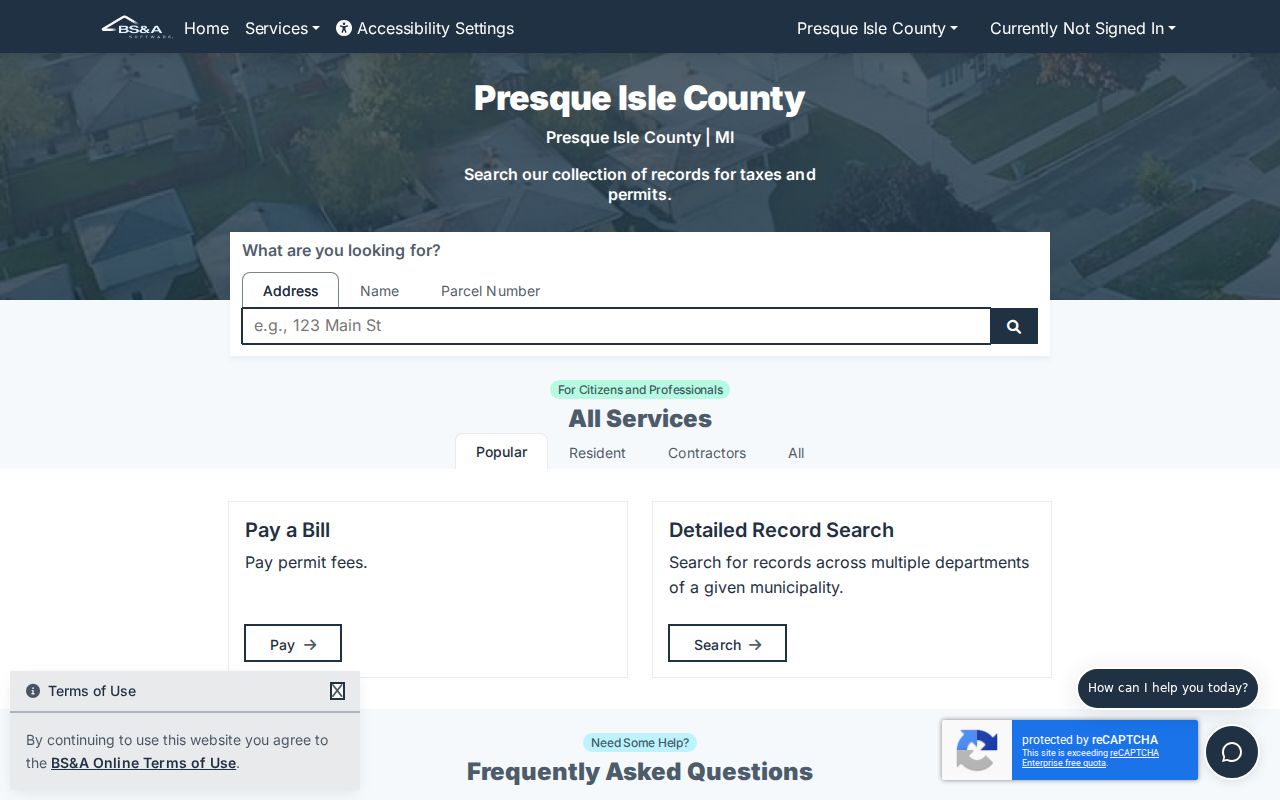
Separate current and delinquent searches come first, before any call to the treasurer.
Delinquent Presque Isle Property Tax
A delinquent flag on a parcel is not a foreclosure. The account may still sit in an early stage. Expect notices, interest, and fees to accumulate first. Then comes a redemption window. Possible court action follows, and only then does an auction occur. Search BS&A for the account number, then ask the County Treasurer directly. That office holds the official delinquent roll, foreclosure lists, notices, and sale material. It covers the year and local unit involved. Useful details include the parcel code, owner of record, legal description, delinquent years, taxes and fees. Notice dates, redemption status, foreclosure date, sale date, buyer, and any surplus notice may also appear. Not every field appears online. The Treasurer page also keeps a notice covering surplus proceeds. It spans the 2013 through 2020 auction sales and the Fox litigation. Its 2026 claim date has passed into history, so confirm current status with the office.
Tax-sale limit. A delinquent account or auction entry does not establish a clean title; review notices, redemption status, liens, court orders, and recorded deeds.
Appeal Presque Isle Property Assessments
Disagree with a value, classification, or exemption? Start with the assessment notice. Talk to the local assessor before anything else. Michigan's standard sequence then runs to the March Board of Review. July and December boards are limited to certain corrections and statutory matters. The path continues to the Michigan Tax Tribunal when the rules permit. The state Board of Review forms page lists Form L-4035, the Petition for Revision of Property Assessment. It also includes L-4400, the assessment and taxable-value notice, and the L-4035a taxable-value worksheet. Bring the parcel code, the notice, photos, measurements, and comparable sales. Include a clear statement of the change you want. Ask your local unit for meeting dates, filing methods, and appearance rules. A well-organized packet helps the assessor. It also helps the board act on your appraisal of the facts.
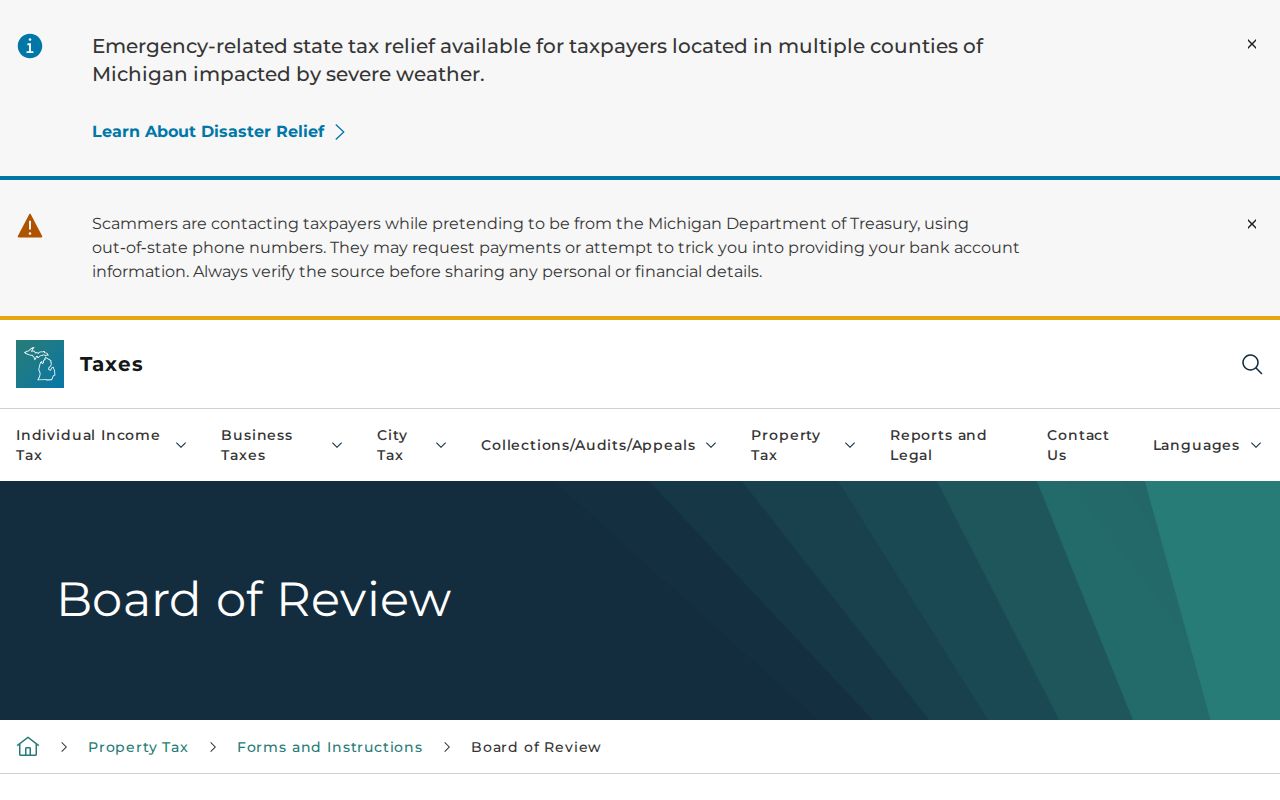
Seeing the exact form names on the official page helps an owner assemble an appeal packet with confidence.
Appeal window. March Board of Review dates and deadlines are set through the local unit. Verify them on the current notice and with the assessor before filing.
Equalization is a county-level review layer. For most assessment disputes, though, the local Board of Review is the first formal appeal point. How assessed values differ from sale price is covered in the Presque Isle County property value record.